










Firefly Aerospace Blue Ghost Moon Landing Nears Historic Lunar Touchdown
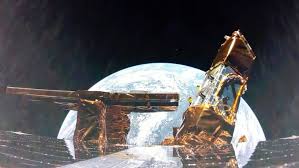
The Firefly Aerospace Blue Ghost Moon Landing is set to become one of the most important space missions of the year. Developed by Firefly Aerospace, the Blue Ghost lunar lander is preparing to deliver NASA science experiments safely to the Moon. The mission highlights the growing role of private companies in space exploration and supports future human missions to the lunar surface.
What Is Blue Ghost?
Blue Ghost is a robotic lunar lander designed by Firefly Aerospace to transport scientific equipment to the Moon. The mission is part of NASA’s Commercial Lunar Payload Services (CLPS) program, which partners with private companies to deliver research instruments for lunar exploration.
The spacecraft is built to perform a precise landing while carrying valuable technology that will collect data for future Moon missions.
Mission Objectives
The primary goal of the mission is to place NASA payloads safely on the Moon. These instruments will study several important aspects of the lunar environment, including:
- Lunar soil and surface composition
- Heat flow beneath the Moon’s surface
- Radiation levels
- Lunar dust behavior
- Navigation and communication technologies
The information gathered will help scientists better understand the Moon and prepare for long-term exploration under NASA’s Artemis program.
Why This Mission Is Important
The Firefly Aerospace Blue Ghost Moon Landing represents another major step in commercial spaceflight. Instead of relying only on government agencies, NASA is working with private companies to lower costs and increase the frequency of lunar missions.
A successful landing would demonstrate that commercial spacecraft can reliably deliver scientific payloads to the Moon, opening new opportunities for research and future space missions.
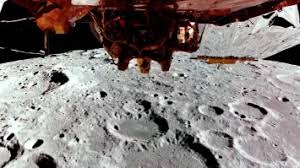
Technology Behind Blue Ghost
Blue Ghost is equipped with advanced navigation systems, autonomous landing software, and precision thrusters. These technologies allow the spacecraft to adjust its descent in real time and safely land on the Moon’s rugged surface.
Its compact design also improves efficiency while maximizing the amount of scientific equipment it can carry.
Challenges of Landing on the Moon
Landing on the Moon remains one of the most difficult tasks in space exploration. There is no atmosphere to slow a spacecraft, making every stage of the descent critical.
Blue Ghost must overcome several challenges, including:
- Extreme temperature changes
- Uneven lunar terrain
- Fine lunar dust
- Communication delays with Earth
Even a small navigation error could affect the mission, making precision essential.
What Happens After Landing?
If Blue Ghost lands successfully, it will immediately begin transmitting scientific data back to Earth. The onboard instruments will perform experiments over the mission’s operational period, providing researchers with valuable information about the lunar environment.
The mission’s findings will support future robotic and crewed missions to the Moon.
The Future of Firefly Aerospace
Firefly Aerospace has ambitious plans beyond this mission. The company aims to develop regular lunar transportation services that can deliver scientific instruments, commercial payloads, and exploration equipment.
Future Blue Ghost missions could play an important role in building a sustainable human presence on the Moon and supporting international space exploration.
Final Thoughts
The Firefly Aerospace Blue Ghost Moon Landing is more than a lunar mission—it is a milestone in the evolution of commercial space exploration. As the spacecraft approaches its historic touchdown, scientists, engineers, and space enthusiasts around the world are watching closely.
If successful, Blue Ghost will not only advance lunar science but also strengthen the partnership between NASA and private industry, bringing humanity one step closer to a lasting presence on the Moon.



This was very informative! This site has additional information on the same subject.
Thanks for breaking down IL in such a simple way.
Finally, a trustless way to move assets between chains!
Navigating Insolvency Risks
Renbridge
buying facebook account account acquisition account selling platform
buy facebook account sell account website for buying accounts
betpuan girişbetpuan
gengtoto login
More content pieces like this would make the blogosphere richer.
Hometogel
barcatoto
Bosstoto
Kepritogel
I switched from another service because of the scalable features and wide token selection.
I was skeptical, but after a week of using the mobile app, the fast transactions convinced me.