










Google Willow Chip: The Superbrain Revolutionizing Problem-Solving
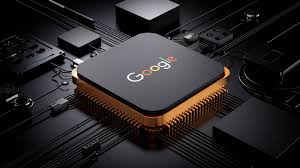
Quantum computing has taken another major step forward with the introduction of the Google Willow Chip. Designed to push the boundaries of computational power, this next-generation quantum processor showcases Google’s continued investment in solving problems that traditional computers struggle to handle.
Although quantum computing is still an emerging technology, the Google Willow Chip highlights how future computers could transform scientific research, artificial intelligence, healthcare, and many other industries.

Understanding Google’s New Quantum Processor
The Google Willow Chip is Google’s latest quantum processor. Unlike conventional computers that use binary bits (0s and 1s), quantum computers use qubits, which can represent multiple states simultaneously through the principles of quantum mechanics.
This unique capability allows quantum processors to perform highly complex calculations much more efficiently than classical computers for specialized tasks.
How Quantum Computing Works
Traditional computers process information one step at a time. Quantum computers work differently by using superposition and quantum entanglement, enabling them to evaluate many possible solutions simultaneously.
This approach makes quantum computing especially useful for solving optimization problems, scientific simulations, and mathematical calculations that would otherwise require enormous computing resources.
Why Quantum Computing Innovation Matters
The Google Willow Chip represents more than faster hardware. It demonstrates continued progress toward making quantum computers more reliable and scalable.
Researchers are working to reduce computational errors, improve qubit stability, and develop systems capable of handling increasingly complex workloads. Each advancement brings practical quantum computing closer to reality.
Quantum Technology Applications Across Industries
As quantum technology matures, Google’s latest quantum processor could support innovations in several fields.
Healthcare and Drug Discovery
Quantum simulations may help scientists understand molecular interactions more accurately. This could accelerate the development of new medicines and improve research into diseases that remain difficult to treat.
Artificial Intelligence
Future AI models may benefit from quantum computing by processing massive datasets more efficiently and solving complex optimization problems faster than today’s systems.
Climate and Environmental Research
Quantum computers could improve climate modeling by analyzing enormous amounts of environmental data, helping researchers create more accurate forecasts and evaluate potential solutions to global climate challenges.
Cybersecurity
Quantum technology is expected to influence the future of digital security. While it may eventually challenge some current encryption methods, it is also driving the development of stronger quantum-resistant security standards.
Challenges Facing Quantum Computing
Despite impressive progress, quantum computing remains in its early stages.
Researchers continue to address important challenges, including reducing error rates, extending qubit coherence times, and developing software that fully utilizes quantum hardware. These improvements will be essential before quantum computers become widely available for commercial use.
The Future of Quantum Computing Innovation
The Google Willow Chip is an important milestone in the evolution of quantum computing. As research continues, future generations of quantum processors could help solve scientific problems that are currently beyond the capabilities of even the world’s fastest supercomputers.
From accelerating medical discoveries to improving artificial intelligence and optimizing complex systems, quantum computing has the potential to reshape many aspects of modern life.
Final Thoughts
The Willow quantum processor demonstrates Google’s commitment to advancing quantum computing technology. While widespread practical applications may still take time, this breakthrough represents meaningful progress toward more powerful and efficient computing.
As quantum research continues, innovations like this next-generation processor could unlock new possibilities across science, medicine, engineering, and technology, paving the way for discoveries that were once considered impossible.




National Insurance Increase
Decentralization + simplicity = Rhino Bridge gets it right.
Love the vision—Bitcoin DeFi is just getting started!
The real-life scenarios were super relatable and useful.
Awesome reminder that bridging opens doors in Web3.
RenBridge Review
Bridge BTC on RenBridge
RenBridge
RenBridge
RenBridge
h505dj
I truly liked the approach this was written.
gengtoto login
barcatoto
Bosstoto